MUSIC STORES · RENTALS
For a lot of music stores, the student rental program is the steady part of the business. Instruments go out every August, payments come in every month, and a good share of those rentals turn into purchases down the road. It is also the part that runs on the most duct tape: a spreadsheet, a binder of signed agreements, and a point-of-sale system that was never designed for any of it.
Here is what a rental program actually needs from software, and where most stores’ current setups quietly cost them time and money.
Why Rental Programs Outgrow the Spreadsheet
Every rented instrument is a small ongoing relationship: a serial number, a student, a parent or guardian, a school, a monthly payment, and often a rent-to-own clock running in the background. A spreadsheet can store all of that. What it can’t do is act on it.
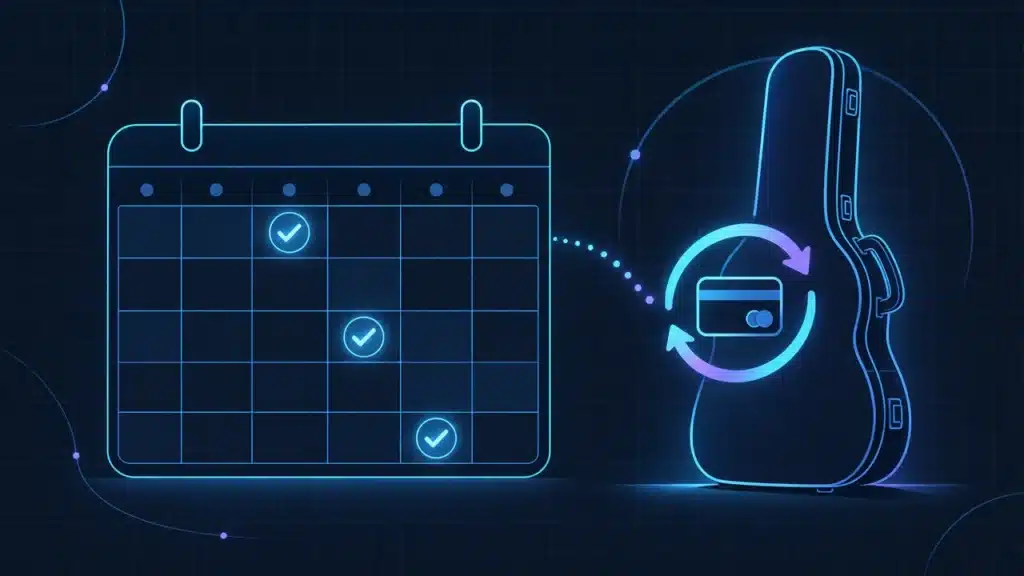
It won’t charge the card on the first of the month, retry the one that failed, text a parent before the agreement renews, or tell you which of the cellos you own are actually on the shelf. So someone on your staff does those things by hand, usually in the busiest weeks of the year.
What Rental Software Needs to Track
At a minimum, a rental system should keep one record per instrument and one per rental agreement, and connect the two:
- The instrument: make, model, serial number, condition, and where it is right now (on the shelf, out on rental, or in repair).
- The renter: student, parent or guardian contact details, and the school and ensemble.
- The agreement: terms, start date, and a signed copy stored with the record.
- The payments: a card or bank account on file, a schedule, and a clear history of what was paid and what failed.
- Rent-to-own progress: how much has been applied toward purchase, and when the instrument becomes eligible.
- Service history: repairs, loaners, and inspections when it comes back.
If your current setup can’t answer “who has serial number 48213, and are they current on payments?” in under a minute, that’s the gap.
The School Side Is Half the Job
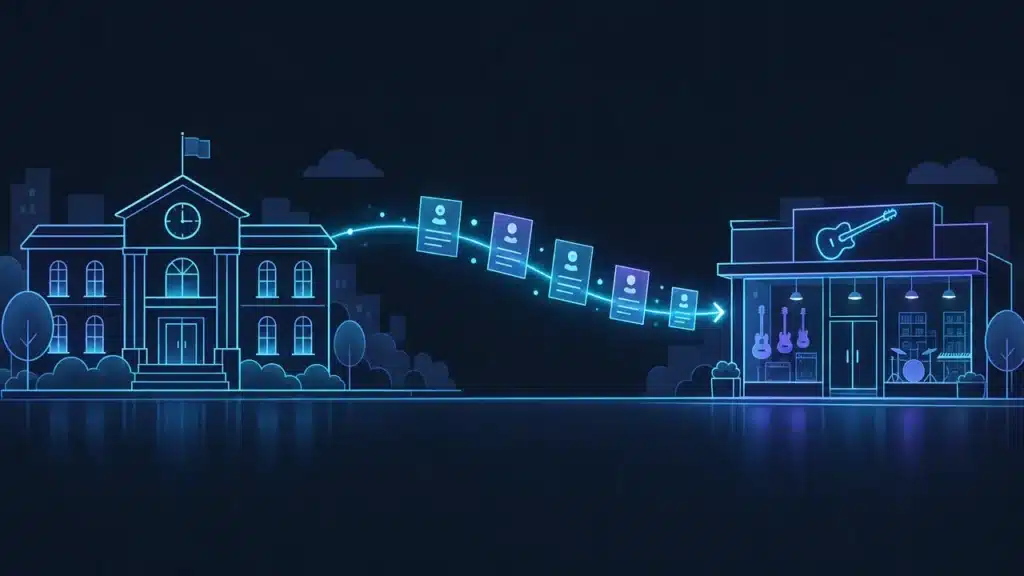
Band and orchestra directors drive demand. Each year they decide which instruments students need, and stores end up collecting those lists through email, photos of paper forms, and phone calls, right before the rush.
A school portal changes that. Instead of chasing lists, the school uploads its courses and instrument needs directly, and the store sees demand before the first rental walks in the door. It’s one of the pieces generic rental tools tend to skip, which is why ADS built a school portal into the rental program we developed for music stores.
Automate the Follow-Up, Not Just the Billing
Recurring billing is the easy part. The value is in the follow-up nobody has time for by hand:
- A friendly text or email when a payment fails, with a link to update the card.
- A heads-up to parents as the rental period nears renewal.
- A rent-to-own reminder when a student is close to owning the instrument.
- An end-of-year message that makes it easy to renew, buy, or return.
- A step-up offer when a student outgrows a beginner instrument.
These run best when the rental system and the CRM are the same system, so the message goes out automatically based on what is actually happening in the account.
Keep Rentals and Your Online Store Together
If rentals live in one tool and your web store lives in another, you end up with two customer lists and two sets of inventory. ADS’s music store build runs the rental workflow on WooCommerce and connects it to EnGaged, our white-label CRM, so rentals, retail purchases, and customer communication sit in one place. It’s delivered as part of a Smart Start, which bundles the website, CRM, automation, and support.
Questions to Ask Any Rental Software Vendor
- Can it handle both rent-to-own and straight rental agreements?
- What happens when a recurring payment fails: who is notified, and when?
- Can schools submit their instrument needs directly?
- Does it connect to our online store and customer list, or is it a separate silo?
- Can we export all of our data if we ever leave?
See a Music Store Rental Program in Action
ADS builds music store websites with a custom rental workflow, store to student, plus a school portal, as part of a Smart Start. If you’d like to see how it works and talk through how your program runs today, let’s set up a time.